Core Workflow Design Patterns
1. Chaining Step-by-Step progression where each stage reasons over evolving context
2. Parallel Run multiple branches simultaneously and merge signals into one decision
3. Switch Dynamically route to the right sub-flow using intent, entities, profile, state
4. Iteration Evaluate –> Adjust –> Recompute until constraints/threshold are satisfied
How to Design a Workflow Agent
1. Define the Job to be Done
2. Set Execution Boundaries
3. Choose Orchestration Pattern(s)
4. Design for Real-World Exceptions
5. Plan for Async + Long-Running Work
6. Instrument + Test End-to-End
Workflow Agent Building Blocks
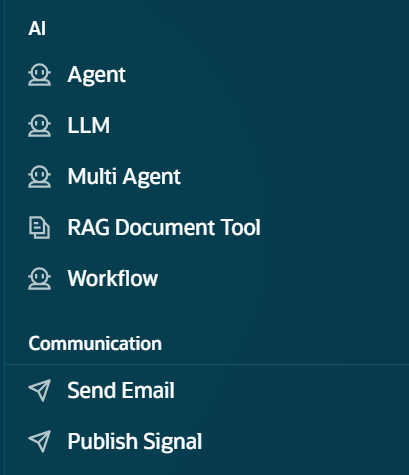
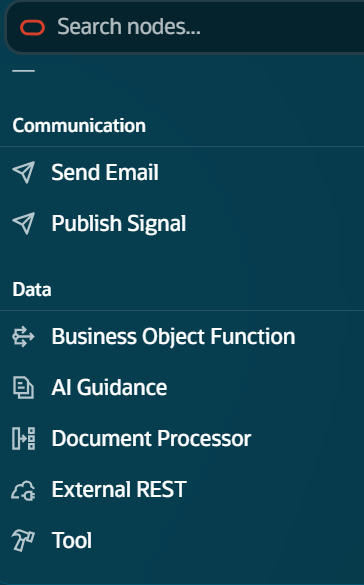
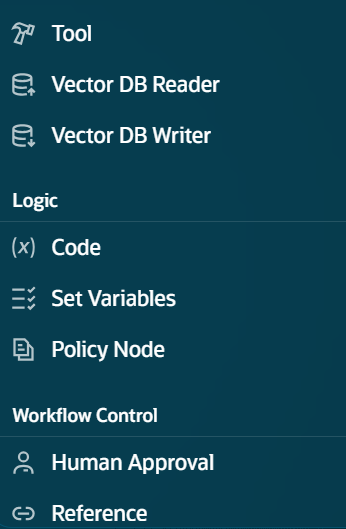
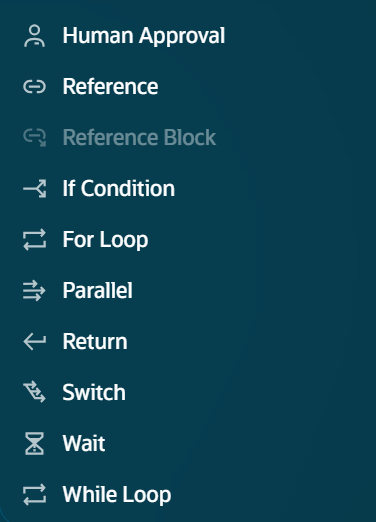
5 Categories of Nodes, Each with a Distinct Role in the Workflow
| AI Nodes | LLM Node, Agent Node, Workflow Node, RAG/Document Tool |
| Logic Nodes | Set Variables, Code Node |
| Data Nodes | Business Object, Document Processor, External REST, Tool Node, Vector Read/Write |
| Workflow Control | Nodes If, Switch, Loop/For-each, While, Run in Parallel, Human Approval, Wait |
| Communication Nodes | Email, (Coming: PDF, PowerPoint, Podcast Generation) |
 |
 |
 |
 |
